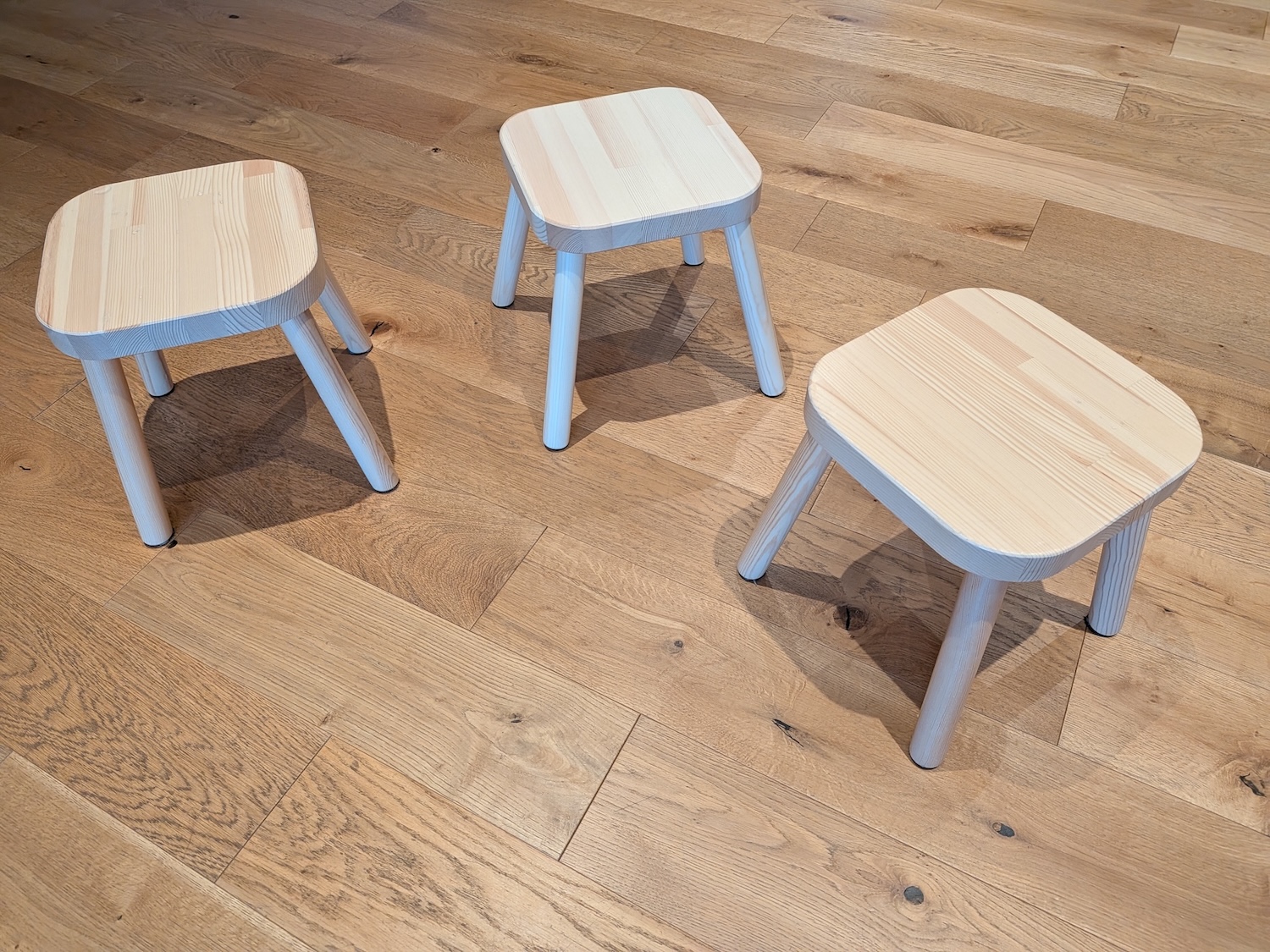
The IKEA FLISAT children’s stool is a decent stool for small children but it has some flaws. Luckily these can be fixed with some small modifications. Since I’ve done this three times now, I thought I’d write down a short guide.
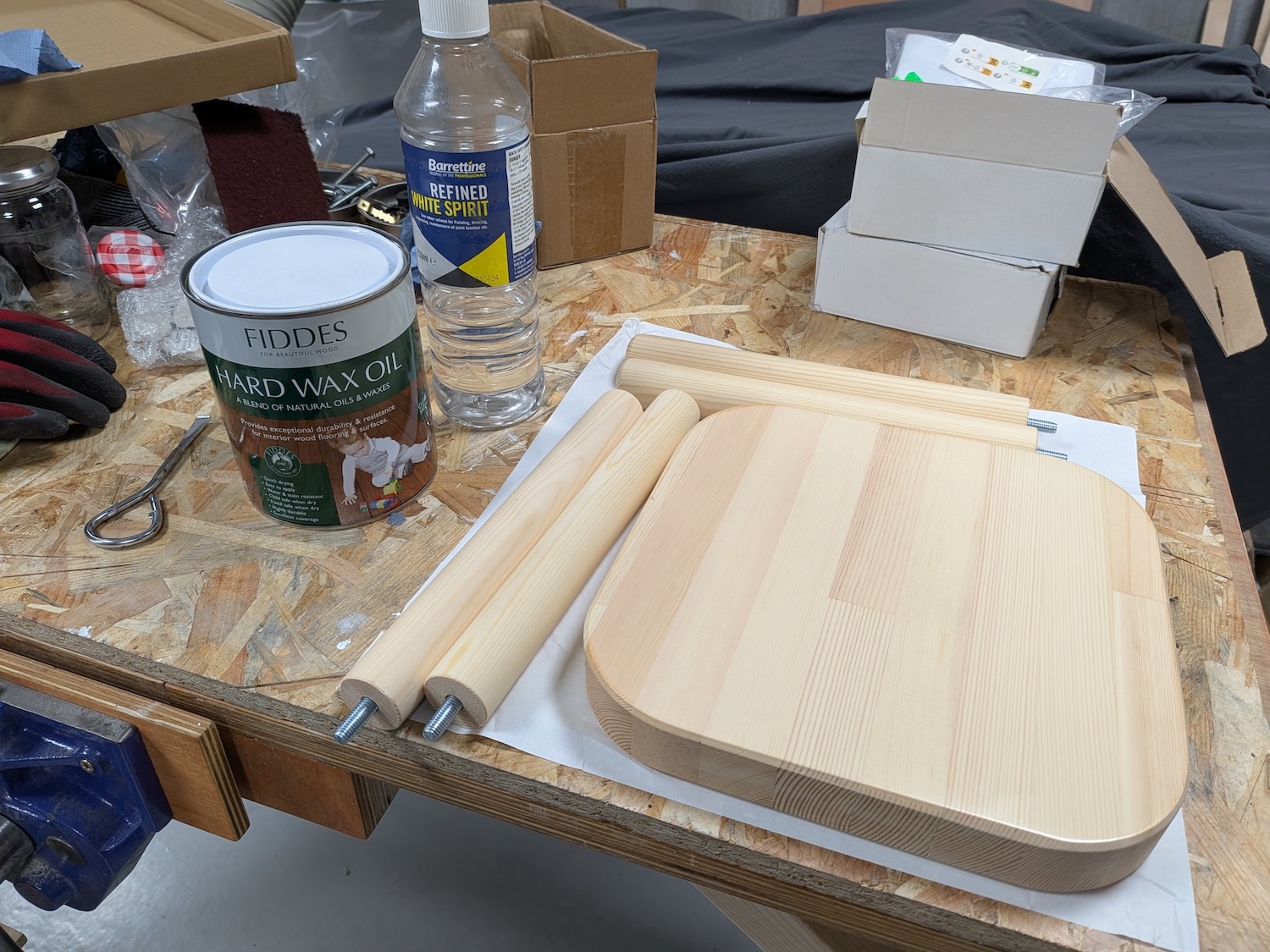
The stool is unpainted which makes it difficult to clean when a child draws on it with felt-tip markers. I’m no expert when it comes to painting. I have tried several different finishes for wood and my current favourite for indoor wooden furniture is Fiddes Hard Wax Oil because it’s transparent, dries fairly quickly, only needs two coats, and is easily obtainable in the UK. I apply each coat using tissue paper rather than a brush so that there’s no need to clean a brush.
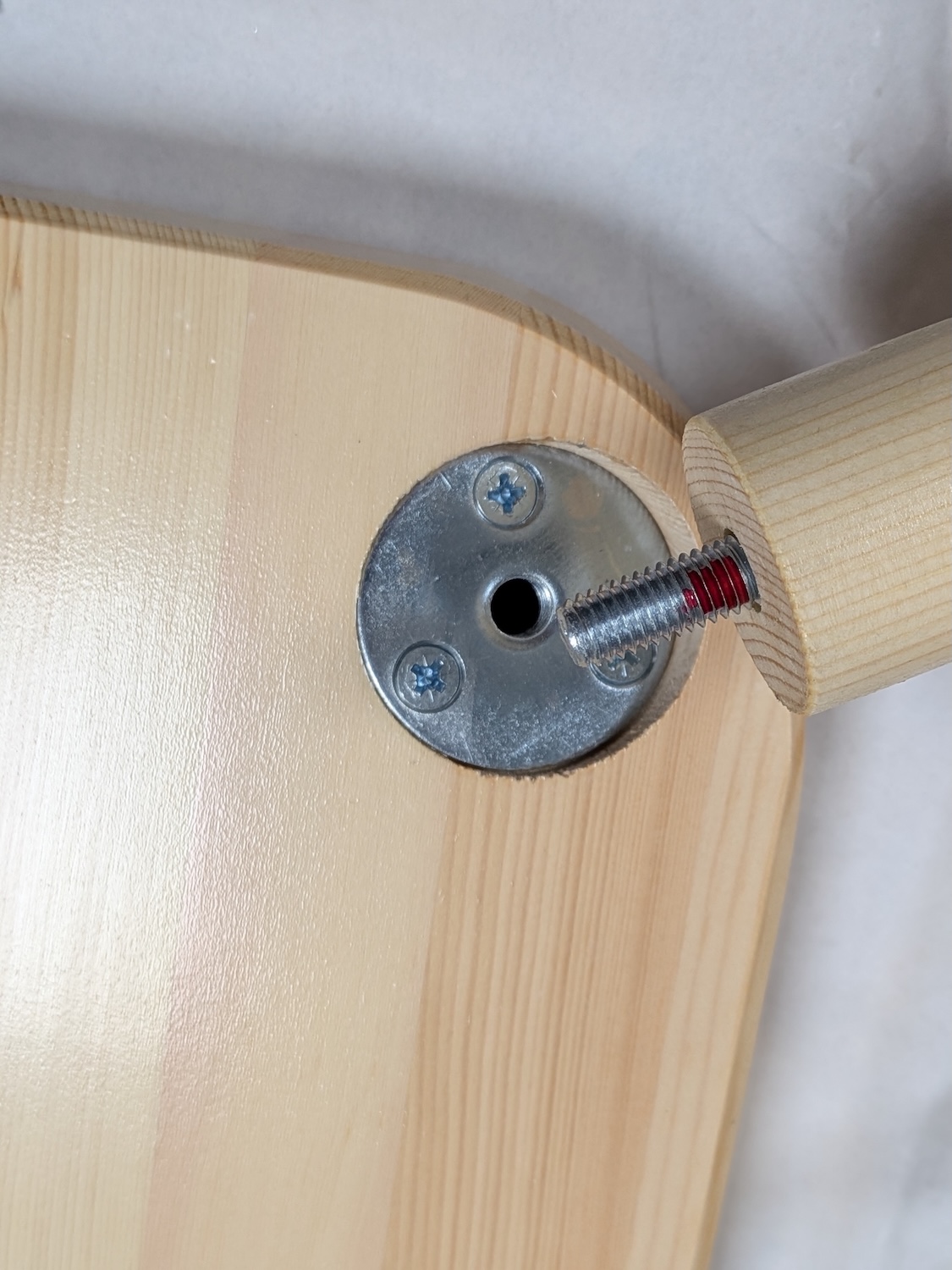
The legs are screwed onto the base with metal studs. Children realise this within minutes and unscrew them. To prevent them from being removed, apply a small dab of Loctite 271 (red high strength threadlocker), screw them in firmly and leave them to dry. Now they won’t come off unless heat is applied to melt the threadlocker.
The leg ends are ball-shaped. The ball-shaped leg ends create a problem: they contact the floor at a single point, concentrating all the stool’s weight there, which may dent whatever is underneath it. Children like to put stools on top of other things, such as other softwood stools, which are prone to being dented.
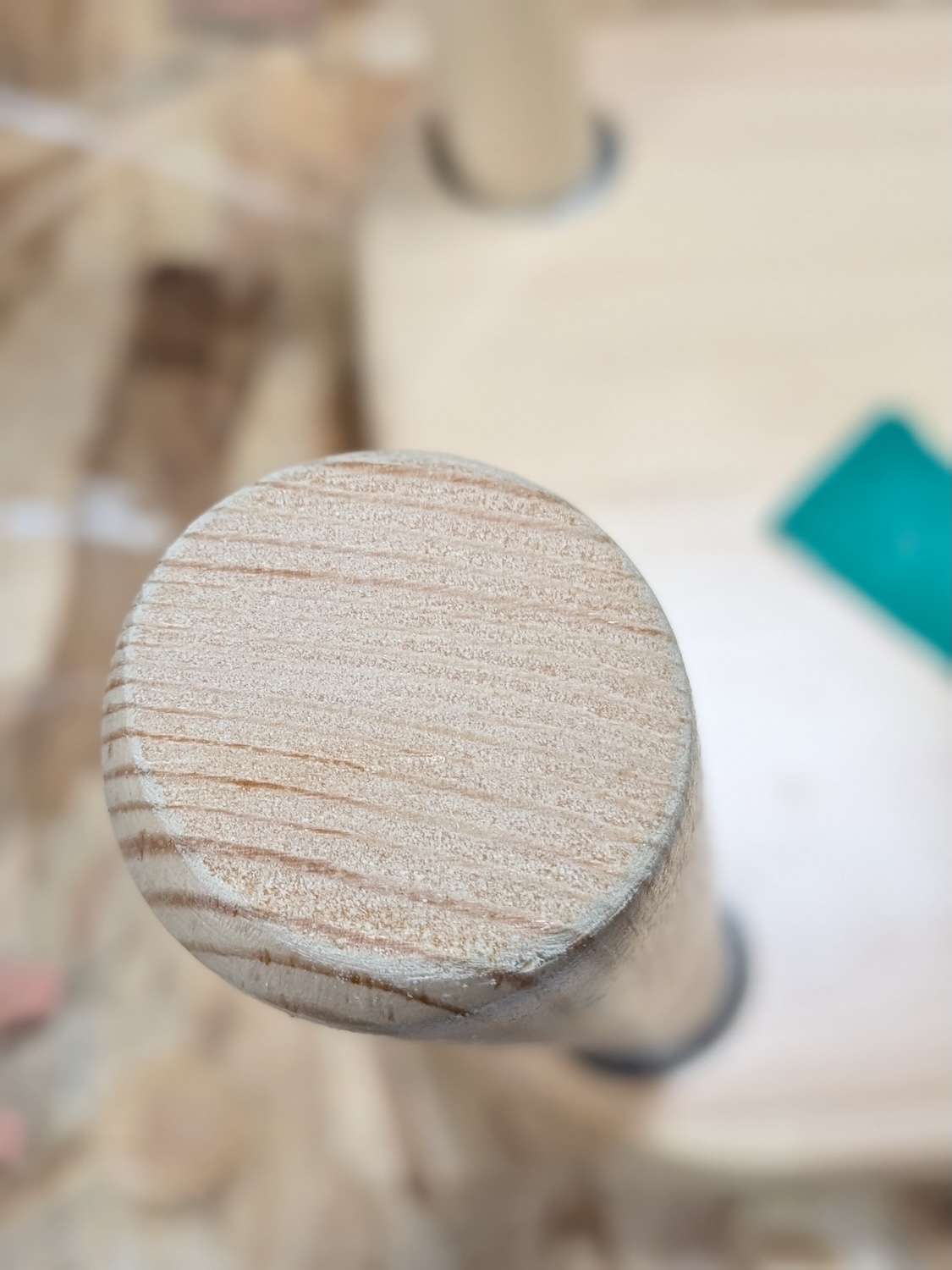
Since the legs can no longer be rotated, I saw off the ends parallel to the floor so that the contact area is a plane rather than a point.
Of course, the exact same height needs to be cut from each leg and the cuts must be parallel for this to work. It doesn’t have to be perfect because once there’s any weight on the stool, the wood will flex to fit, but it should be reasonably good.
I do it by first cutting four pieces of scrap 5mm or ¼” plywood (which is reasonably uniform and flat) to use as guides and spacers.
Step 1: Place the stool on a flat table and clamp it down. Place one guide piece next to a leg. Place a thin Japanese crosscut saw on the guide piece and carefully saw sideways through the leg keeping the blade in contact with the guide.
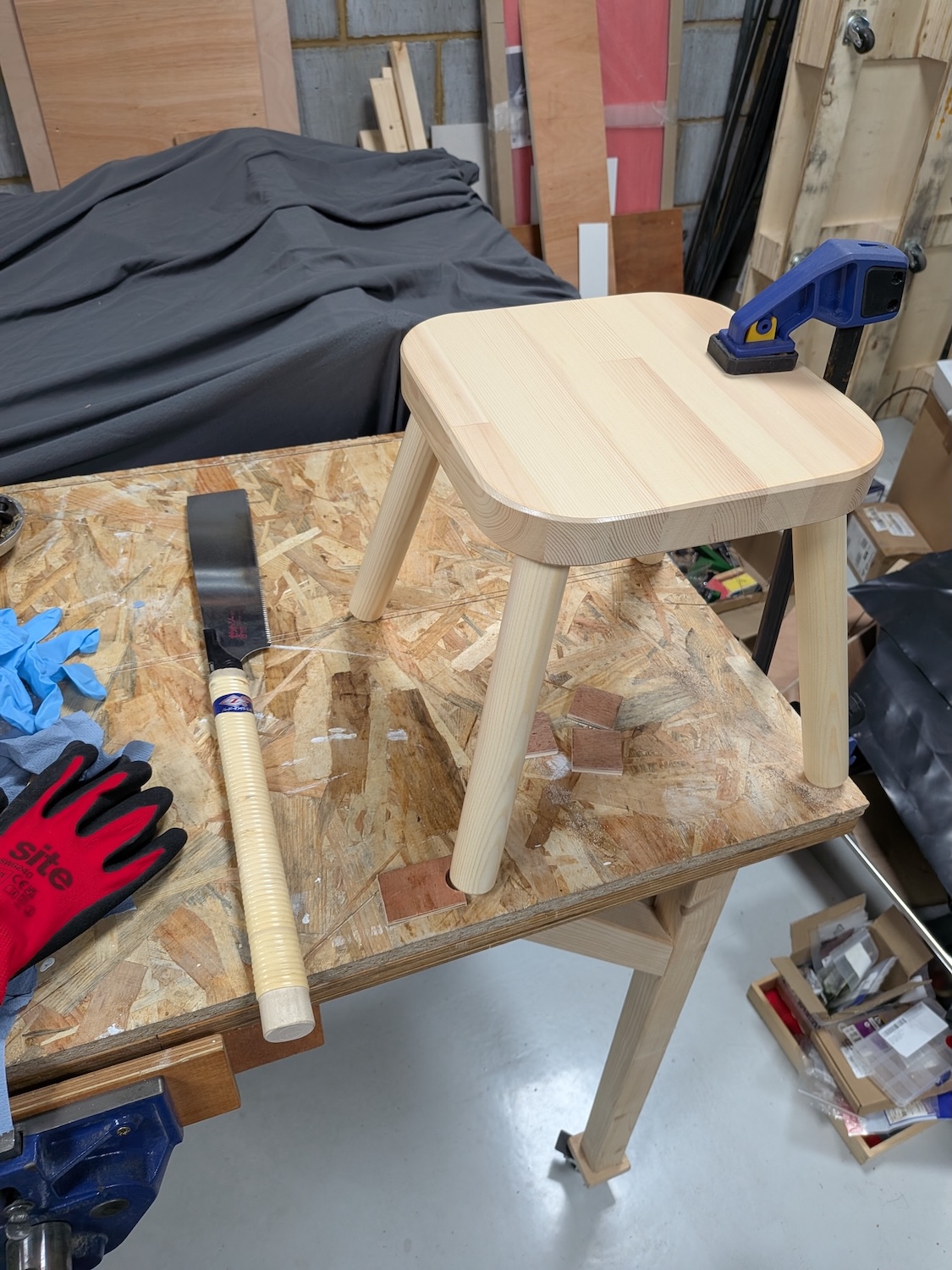
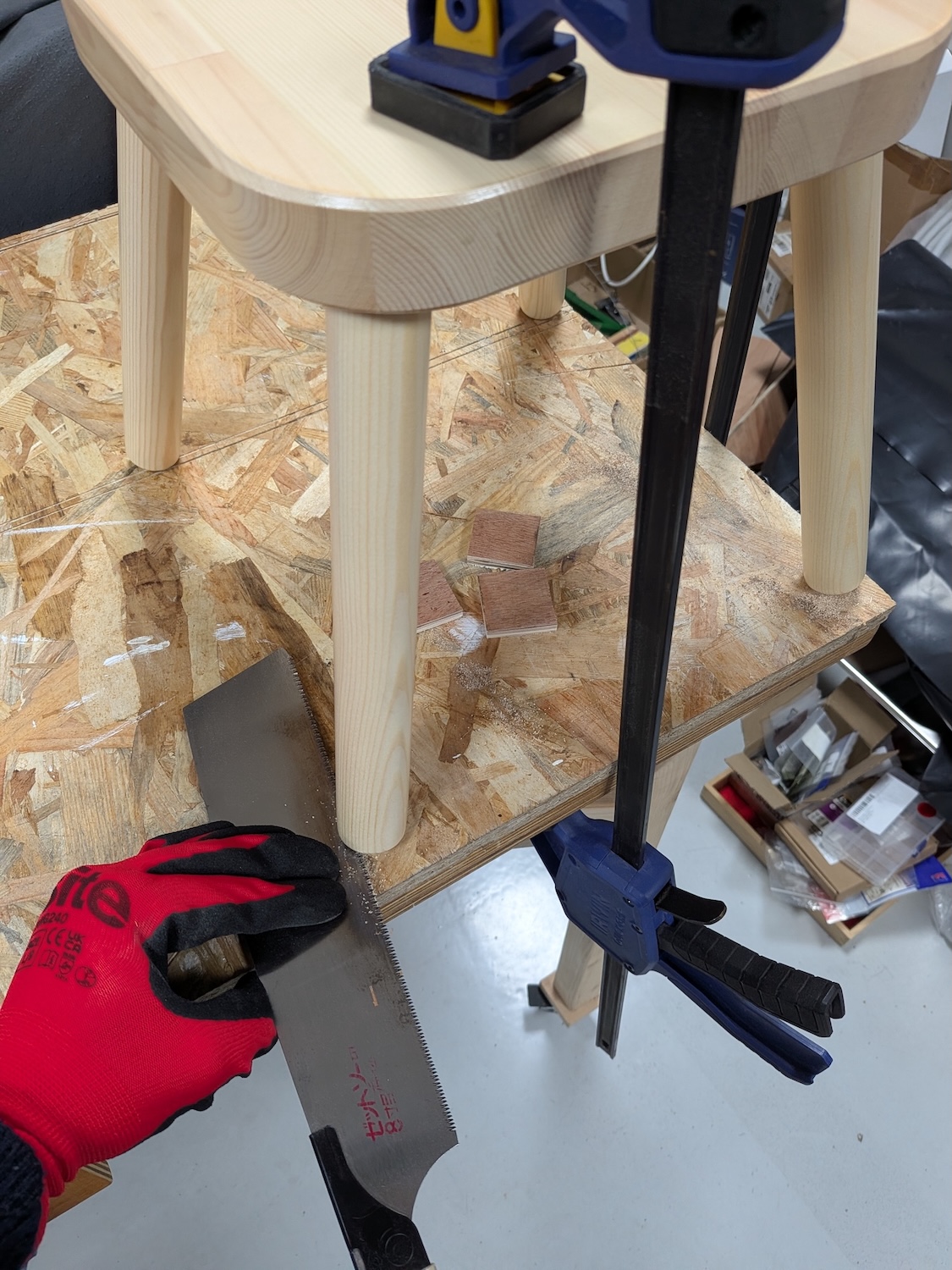
Step 2: Slide the guide piece underneath the leg that was just sawed and clamp the stool down to the table again. Use another guide piece to cut through the next leg.
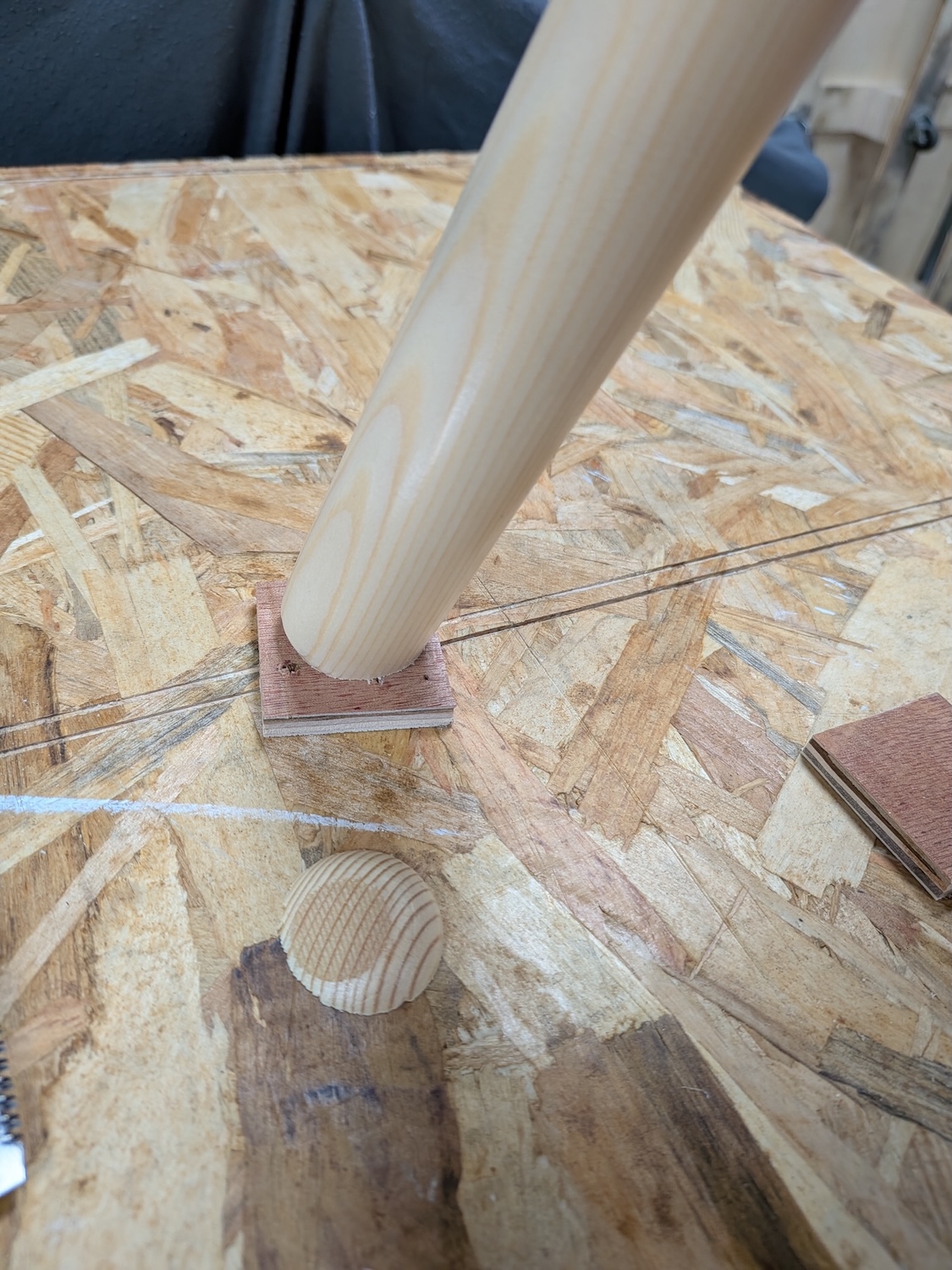
Step 3 & 4: Repeat the process until all the legs have been sawed.
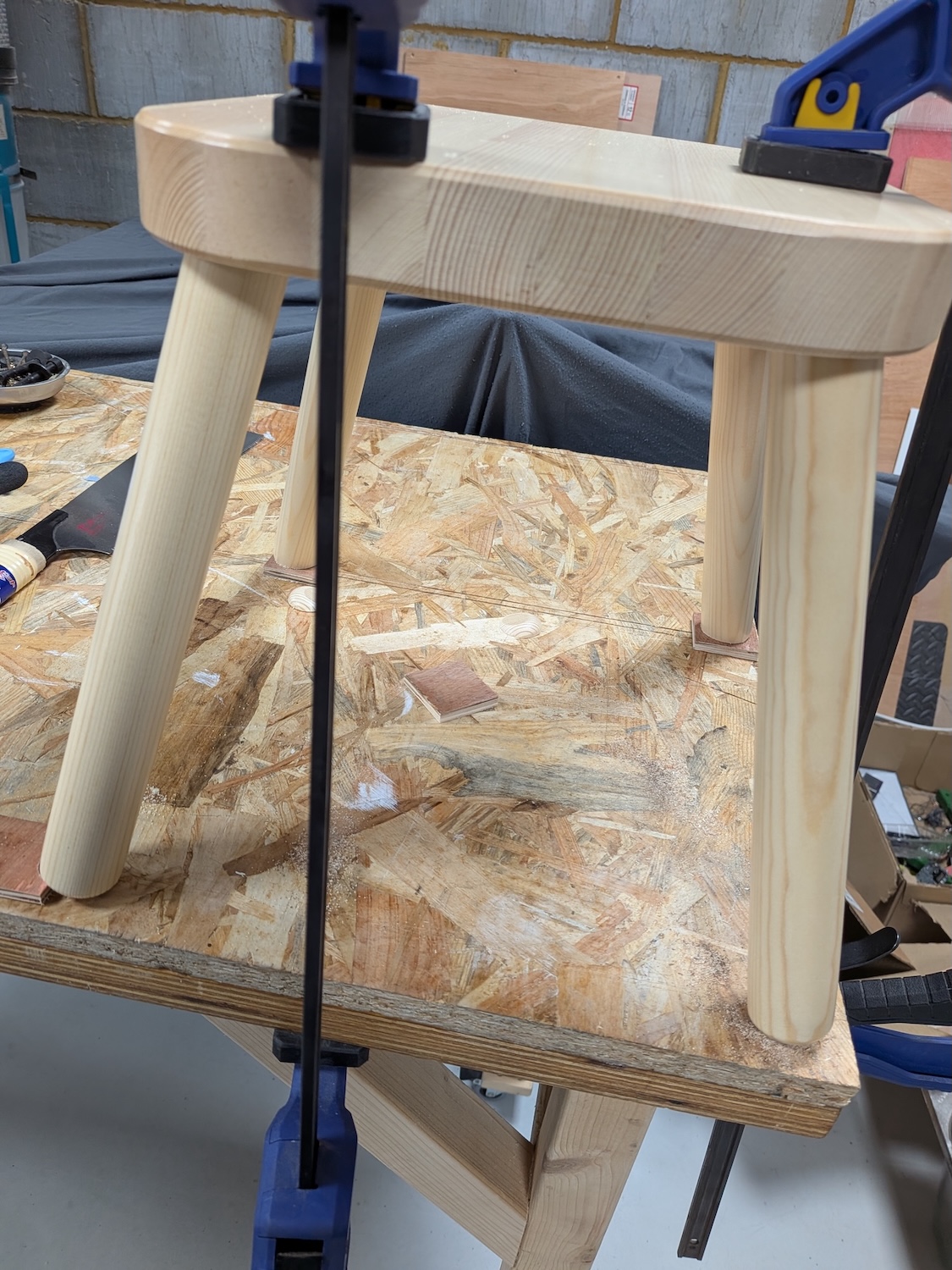
At this point, all the guide pieces can be removed and the stool should sit flat on the table.
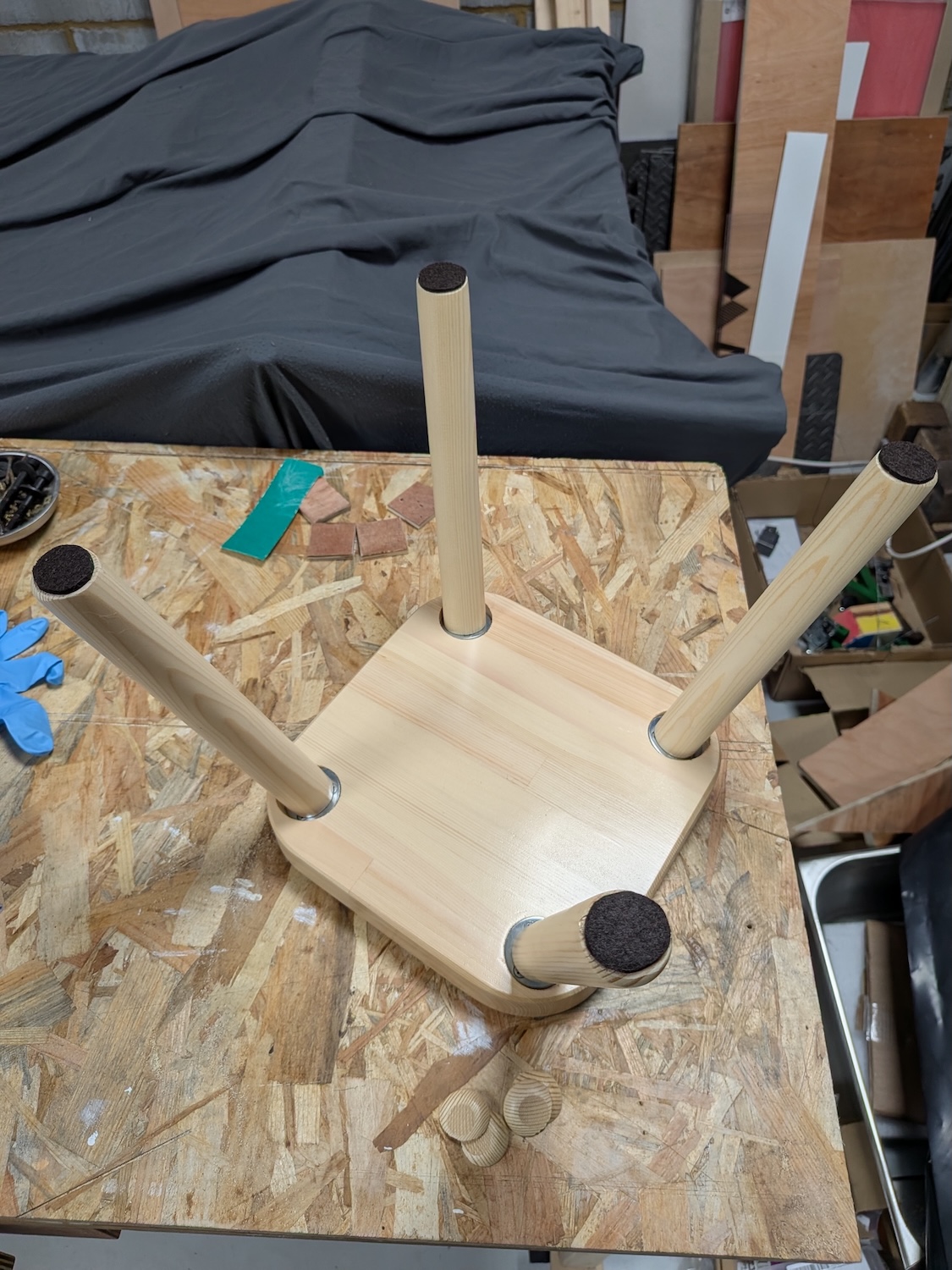
Children like to push and pull stools across the floor. To reduce scratching, attach felt glider pads. There are lots of sticky-backed felt gliders available, including from IKEA. However, these always come off because the adhesive is not strong enough. To make them stick better, Matthias Wandel describes a technique using hot glue in his video “Stick felt pads to stool legs so they won't come off” (https://www.youtube.com/watch?v=rmS-8XU1-vQ). I find this works very well. However, I don’t bother to remove the sticky layer from the furniture pads anymore and use a hot glue gun rather than a heat gun. This works fine for me and none of them have come off yet.
One more issue with these stools is they are top heavy and kids tend to knock them over onto people’s toes. I don’t have any solution for this.